Maximize Performance: How to Check and Manage Windows 10 Free Space
If you’ve noticed your computer running slower than usual, it might be time to check your Windows 10 free space. As files, applications, and updates accumulate, the available space on your hard drive can fill up quickly, leading to reduced performance and even system crashes. Understanding how to monitor and manage your Windows 10 free space is essential for keeping your PC running smoothly.
In this guide, we’ll show you how to easily check your hard drive’s free space and provide tips to free up space on Windows 10. By the end of this article, you’ll know how to optimize your system for better performance and ensure you always have enough storage to work efficiently.
Table of Contents
Why Windows 10 Free Space Matters
One of the most important factors in maintaining the health of your computer is managing your Windows 10 free space. When your hard drive gets too full, your computer can struggle to perform tasks, and you may encounter issues like slow boot times, lag, and frequent crashes. Windows relies on free space to store temporary files and manage system updates, so ensuring you have enough room is critical.
Here’s why monitoring and managing Windows 10 free space is essential:
Faster Performance: Adequate free space allows your PC to run smoother and faster, especially when handling large files or applications.
Reduced Crashes: Low disk space can cause programs to freeze or your system to crash.
Efficient Updates: Without sufficient space, Windows updates may fail or take much longer to install.
How to Check Windows 10 Free Space on Your Hard Drive
If you’re wondering how much free space is available on your hard drive, Windows 10 makes it easy to check. Follow these simple steps to find out how much space you have left:
Step 1: Open File Explorer
Click on the File Explorer icon in your taskbar, or press Windows + E on your keyboard to open it.
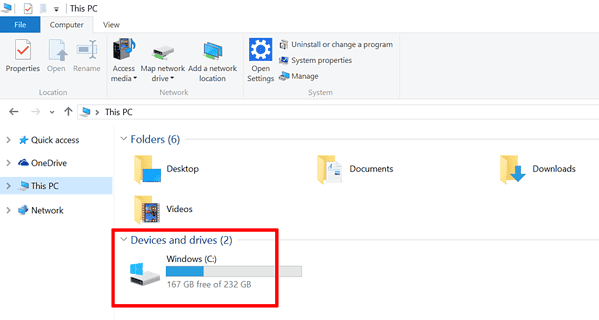
Step 2: Navigate to This PC
Once File Explorer is open, click on This PC in the left-hand menu. This will display a list of all the drives connected to your system.
Step 3: Check Your Hard Drive
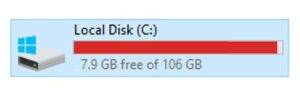
Under the Devices and Drives section, you’ll see your main hard drive labeled Local Disk (C:). Beneath this, you’ll find a visual bar showing how much space is used and how much is free. Hover over the bar to see the exact amount of Windows 10 free space remaining.
This Pc ≫ Devices &Amp; Drives ≫ Windows (C:)
How to Free Up Space on Windows 10
Now that you know how to check your Windows 10 free space, let’s look at ways to free up space when your hard drive is full. These methods will help you reclaim valuable storage and improve your computer’s performance.
1. Use Storage Sense to Automatically Free Up Space
Windows 10 includes a built-in tool called Storage Sense that helps you manage your hard drive’s space. This feature automatically deletes temporary files, system cache, and files in the Recycle Bin that you no longer need.
How to enable Storage Sense:
Open Settings and go to System.
Click on Storage.
Toggle on Storage Sense.
You can also customize Storage Sense to automatically clean up files after a certain period, ensuring your Windows 10 free space stays optimized.
2. Uninstall Unnecessary Applications
Over time, you may have installed programs and applications that you no longer use. These can take up a significant amount of space on your hard drive. Uninstalling unused apps is a quick way to increase your Windows 10 free space.
How to uninstall apps:
Open Settings and go to Apps.
Click on Apps & Features.
Browse through the list of installed programs and uninstall those you no longer need by clicking on the app and selecting Uninstall.
3. Clear Temporary Files
Temporary files, such as those created by your web browser or Windows itself, can accumulate over time and take up valuable space. Cleaning these files regularly helps you free up Windows 10 free space without deleting important documents.
How to clear temporary files:
Open Settings and go to System > Storage.
Click on Temporary files under the Local Disk (C:) section.
Check the boxes for the types of temporary files you want to delete, then click Remove files.
(INSERT image showing Temporary Files removal process here)
4. Use Disk Cleanup for a Deep Clean
Disk Cleanup is a built-in tool that helps you remove system files, old Windows installations, and other unnecessary data that can free up a lot of Windows 10 free space.
How to use Disk Cleanup:
Type Disk Cleanup into the Windows search bar and open the app.
Select Local Disk (C:).
Check the boxes next to the files you want to remove, such as Windows Update Cleanup, Recycle Bin, and Temporary files.
Click OK to start the cleanup process.
5. Move Large Files to External Storage or Cloud
If you’re running low on Windows 10 free space, moving large files like videos, photos, or backups to an external hard drive or cloud storage service can free up significant space.
Best cloud storage options for freeing up space:
OneDrive: Built into Windows 10, OneDrive allows you to store files in the cloud and access them from any device.
Google Drive: Another popular cloud storage option with 15 GB of free space.
External Hard Drives: For offline storage, consider moving large files to an external hard drive to keep your Windows 10 free space optimized.
Why Regularly Checking Windows 10 Free Space is Crucial
Your computer’s performance depends on having enough free space for system processes, applications, and updates to run smoothly. By regularly checking and maintaining your Windows 10 free space, you can avoid common performance issues, ensure smoother updates, and keep your files organized.
Remember, even with a large hard drive, it’s essential to manage your storage efficiently to avoid unnecessary slowdowns or crashes.
Conclusion: Keep Your Windows 10 Free Space Optimized
Maintaining enough Windows 10 free space is key to ensuring your system runs efficiently and without issues. By following the steps outlined in this guide—using Storage Sense, uninstalling unused applications, clearing temporary files, and using Disk Cleanup—you can easily free up space and boost your computer’s performance.
For more advanced help or if you need assistance with managing your hard drive, contact the experts at Kingfisher Computers. We’re here to help you optimize your system and keep your computer running smoothly.
The Illusion of Stability in Modern Updates For most users, operating system updates are something that simply happen. They arrive quietly, often installing in the background, requiring little more than…
Macbook Neo, How Does It Compare To Air & Pro? Over the last few years the laptop market has experienced one of the most significant architectural changes in its history.…
Apple’s latest product announcements mark one of the most significant shifts in the Mac lineup in more than a decade. While Apple routinely updates its hardware with faster chips, incremental…
There is a particular kind of frustration that only a slow computer can produce. It is not dramatic. It is not urgent. It does not scream for attention. Instead, it…
In an era where nearly every aspect of personal computer maintenance and professional life is mediated through digital systems, your computer is no longer a luxury device — it is…
Phone says charging but battery not increasing is one of the most frustrating problems smartphone users face. You plug it in.The lightning bolt appears.It says “Charging.” But the battery percentage…
Apple’s rumour cycle always looks like a thousand disconnected leaks — until you line them up and notice the same themes repeating: AI-first silicon, camera and display differentiation, form-factor experiments (foldables / spatial…
Wi-Fi connected but no internet is one of the most frustrating messages you can see on a computer or laptop. The Wi-Fi icon shows full bars.It says “Connected.”But websites won’t…
Unfortunately, there was an error submitting your request.
Please try again later, or reach out to us directly. You can call us at +44 1429 280955 or email us at sales@kingfishercomputers.co.uk for assistance. We’re here to help you get your computer back up and running!
We’ve received your booking, Our team will get in touch with you shortly to confirm the details. You’re one step closer to having your computer fixed! If you have any urgent questions, feel free to contact us. Otherwise, sit back, and we’ll handle the rest.