MacBook Neo 5 Shocking Ways It Differs From Air & Pro
Connor Boyle
March 13th, 2026
Macbook Neo, How Does It Compare To Air & Pro?
Table of Contents
Over the last few years the laptop market has experienced one of the most significant architectural changes in its history. For decades, personal computers were powered almost exclusively by x86 processors from Intel and AMD. These chips defined the performance expectations, power consumption, and design limitations of laptops for nearly thirty years. In 2020, however, Apple began a transition that would disrupt this long-standing status quo: it replaced Intel processors in its Macs with its own custom ARM-based silicon Neo.
This shift didn’t just affect Apple’s own computers. It reshaped expectations across the entire industry. Apple demonstrated that ARM processors could deliver desktop-class performance with dramatically better efficiency than traditional x86 chips. Suddenly, long battery life, silent cooling, and high performance could exist in the same machine Neo.
Today Apple’s laptop lineup spans three distinct tiers: the budget-oriented MacBook Neo, the widely popular MacBook Air, and the professional MacBook Pro. All three machines represent different design philosophies, target different users, and use different tiers of Apple’s silicon. Understanding how these machines compare requires not just looking at the laptops themselves, but also examining the processors inside them—Apple’s M-series chips, from M1 through the latest M5 generation Neo.
At the same time, it is impossible to discuss Apple’s strategy without comparing it to the wider industry. Windows laptops still dominate the market, powered mostly by Intel and AMD processors built on the x86 architecture. Meanwhile, Microsoft and Qualcomm are attempting to replicate Apple’s success with Windows on ARM, creating a new competitive landscape that could define the future of laptop computing.
This article explores the differences between Apple’s laptops, examines the evolution of Apple Silicon, compares ARM and x86 architectures, and considers how Apple’s machines stack up against their Windows counterparts.
The Structure of Apple’s Laptop Lineup
Macbook Neo 5 Shocking Ways It Differs From Air &Amp; Pro 8
Apple’s current laptop strategy is far simpler than it once was. Historically, the company sold a confusing array of models—MacBook, MacBook Air, MacBook Pro, and multiple variations of each. In the Apple Silicon era, however, the company has gradually streamlined its lineup into clear tiers based on performance and price.
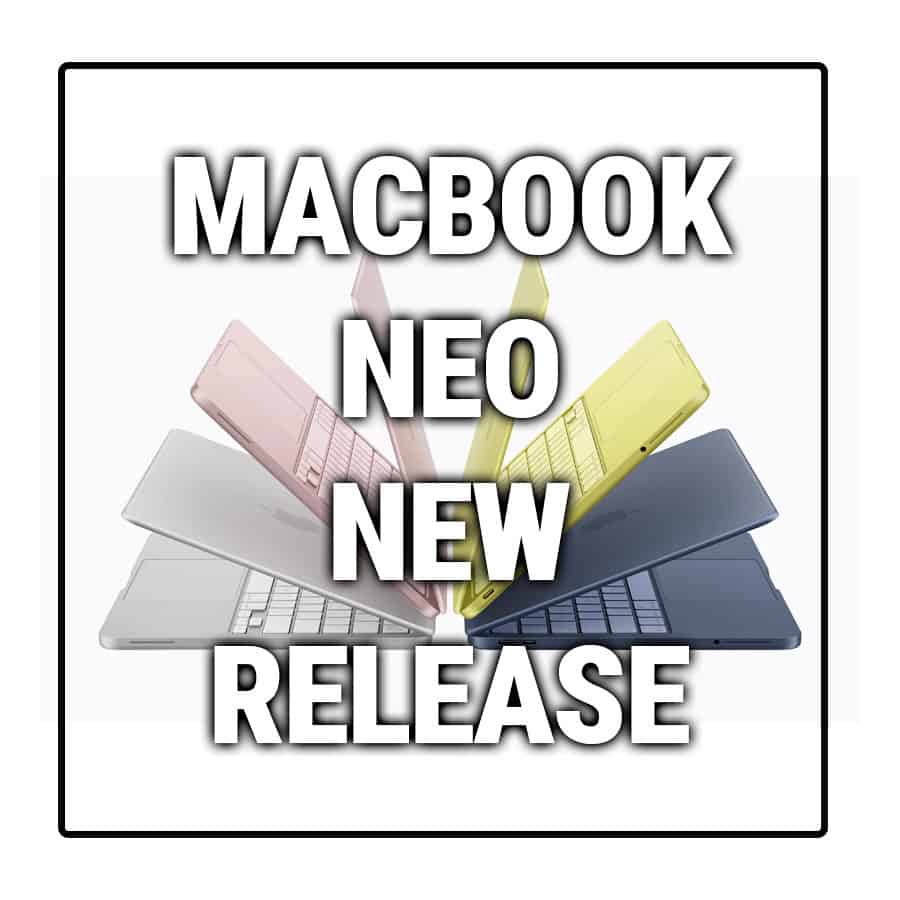
The MacBook Neo sits at the entry level. It represents Apple’s attempt to bring Mac laptops to a wider audience by lowering the cost barrier. Positioned above it is the MacBook Air, which has become the company’s most popular laptop and arguably the most balanced device in its lineup. At the high end sits the MacBook Pro, designed for professionals who demand sustained performance for demanding workloads.
These machines may share a similar design language, but their internal hardware and intended use cases are quite different.
MacBook Neo: Apple’s Entry-Level Vision
Macbook Neo 5 Shocking Ways It Differs From Air &Amp; Pro 9
The idea behind the MacBook Neo is straightforward: create a Mac laptop that is affordable enough to compete with budget Windows laptops and Chromebooks while still offering the benefits of the Apple ecosystem. While Apple has traditionally focused on premium products, a lower-cost laptop could allow the company to expand its reach among students, schools, and first-time Mac users.
The Neo would likely use a processor derived from Apple’s A-series chips, which are the same architecture used in iPhones and many iPads. These chips are extraordinarily efficient and already deliver performance that rivals older laptop CPUs. However, they are not designed for heavy multitasking or workstation workloads.
In practical terms, a MacBook Neo would excel at everyday computing tasks. Web browsing, streaming media, document editing, email, and lightweight programming would run effortlessly. Apple’s ARM-based chips are particularly strong at handling these types of workloads because they combine high-performance cores with extremely efficient low-power cores. When the system is idle or performing simple tasks, it uses the efficiency cores to conserve energy. When the user launches a demanding application, the performance cores take over.
From a design perspective, the Neo would likely prioritize portability and battery life above all else. A lightweight chassis, fanless cooling, and long battery life would make it an ideal companion for students and travelers. However, its limited RAM capacity and reduced graphics performance would make it unsuitable for professional creative work.
In my view, a product like the MacBook Neo could be strategically important for Apple. The company has always excelled at the premium end of the market, but a truly affordable Mac could introduce millions of new users to macOS. If Apple can maintain its typical build quality while keeping the price low, the Neo could become one of the most widely adopted Macs ever released.
MacBook Air: The Mainstream Champion
Macbook Neo 5 Shocking Ways It Differs From Air &Amp; Pro 10
If the MacBook Neo represents accessibility, the MacBook Air represents balance. For many people, it is the ideal laptop because it combines portability, performance, and battery life without major compromises.
The MacBook Air has been part of Apple’s lineup since 2008, when Steve Jobs famously pulled it out of a manila envelope to demonstrate how thin it was. At the time, it was revolutionary, but it also involved significant compromises in performance and connectivity. Apple Silicon has transformed the Air into something much more capable.
When the M1 MacBook Air launched in 2020, it redefined expectations for thin and light laptops. The system delivered performance that rivaled or exceeded many Intel-powered laptops while remaining completely silent. Because the M1 chip was so efficient, Apple removed the cooling fan entirely.
This design philosophy has continued through subsequent generations of the MacBook Air. Each new chip—M2, M3, and beyond—has increased CPU and GPU performance while maintaining the Air’s signature thin and lightweight design.
One of the most impressive aspects of the Air is its battery life. Because Apple’s chips are designed specifically for macOS and optimized for efficiency, the Air can easily last an entire workday on a single charge. For many users, this eliminates the need to carry a charger at all.
In everyday use, the MacBook Air feels remarkably fast. Applications launch instantly, multitasking remains smooth even with many browser tabs open, and creative tools such as photo editing software run surprisingly well. While the Air is not intended to replace a workstation, it is powerful enough for many professional tasks.
In my opinion, the MacBook Air represents one of the best laptop designs currently available. It focuses on the aspects of computing that matter most to the majority of users: speed, reliability, battery life, and portability. Rather than chasing maximum performance numbers, Apple optimized the Air for real-world usage.
MacBook Pro: A Portable Workstation
While the MacBook Air targets general users, the MacBook Pro is designed for professionals who need sustained performance. Creative professionals, developers, engineers, and researchers often run workloads that push hardware to its limits for extended periods of time. Video rendering, software compilation, machine learning models, and 3D graphics all demand significant computational power.
The MacBook Pro addresses these needs by combining high-performance Apple Silicon chips with active cooling and higher memory capacities. Unlike the Air, which relies on passive cooling, the Pro includes fans that allow the processor to run at full speed for long periods without throttling.
The latest MacBook Pro models use chips such as the M5 Pro and M5 Max, which dramatically expand CPU and GPU capabilities. These processors feature far more cores than the standard M-series chips used in the Air, and they support significantly larger amounts of unified memory. For professionals working with large datasets, high-resolution video, or complex simulations, this additional memory bandwidth can make a substantial difference.
Another key advantage of the MacBook Pro is its display technology. Apple’s Pro models use high-quality mini-LED displays with excellent brightness and color accuracy, making them particularly appealing for photographers and video editors.
What I find most impressive about the MacBook Pro is how much performance it delivers relative to its size. Just a decade ago, the level of computing power available in a MacBook Pro would have required a large desktop workstation. Today, that power fits in a laptop that can still run for many hours on battery power.
The Evolution of Apple Silicon: M1 to M5
Macbook Neo 5 Shocking Ways It Differs From Air &Amp; Pro 11
Understanding Apple’s laptop lineup requires understanding the processors that power it. Apple’s M-series chips are the result of years of investment in custom silicon design.
The journey began with the M1 chip, which was introduced in 2020. The M1 represented Apple’s first ARM-based processor designed specifically for Mac computers. Instead of relying on Intel’s x86 chips, Apple built a system-on-chip that integrated the CPU, GPU, memory controller, and several specialized accelerators into a single piece of silicon.
The M1’s architecture allowed it to deliver impressive performance while consuming very little power. It quickly became clear that Apple’s approach to processor design offered significant advantages over traditional laptop CPUs.
The M2 generation refined the architecture further. It increased memory bandwidth, added additional GPU cores, and improved machine learning performance. The M2 also expanded into higher-performance variants such as the M2 Pro and M2 Max, allowing Apple to scale the architecture for professional workloads.
The M3 generation introduced one of the most significant GPU upgrades in Apple Silicon’s history. Hardware ray tracing and dynamic caching improved graphics performance and allowed Macs to handle more complex visual workloads.
With the M4 generation, Apple focused on efficiency and artificial intelligence acceleration. As machine learning tasks became increasingly common in modern software, Apple integrated more powerful neural processing units into its chips.
The M5 generation represents the latest step in this evolution. These chips feature faster CPU cores, improved GPU performance, and dramatically enhanced AI processing capabilities. In many benchmarks, the latest M-series processors rival high-end desktop CPUs while maintaining far better efficiency.
Apple’s Silicon Ecosystem
One of Apple’s greatest advantages is the way it integrates hardware and software across its entire ecosystem. Apple Silicon is not limited to Macs. Similar architectures power the iPhone, iPad, Apple TV, and several other Apple devices.
This unified architecture allows developers to optimize their applications across multiple platforms with minimal effort. An application built for Apple Silicon can often run across several devices with little modification.
From a strategic perspective, this approach gives Apple an enormous advantage. While most PC manufacturers rely on third-party processors and operating systems, Apple controls nearly every aspect of its hardware and software stack.
ARM vs x86: The Architecture Debate
Macbook Neo 5 Shocking Ways It Differs From Air &Amp; Pro 12
The difference between Apple’s processors and those used in most Windows laptops comes down to architecture. Apple’s chips use the ARM architecture, while Intel and AMD processors use x86.
ARM processors are designed around a philosophy known as Reduced Instruction Set Computing (RISC). This approach emphasizes simplicity and efficiency. By using simpler instructions that execute quickly, ARM processors can perform many tasks while consuming very little power.
In contrast, x86 processors use a Complex Instruction Set Computing (CISC) architecture. These chips support a large number of instructions, many of which were introduced decades ago to maintain compatibility with older software.
The advantage of x86 is compatibility. Virtually all traditional PC software was built with x86 processors in mind. However, the complexity of the architecture can make it less efficient.
ARM processors have historically been weaker in raw performance, but that gap has closed significantly in recent years. Apple’s M-series chips demonstrate that ARM designs can compete with or even surpass many x86 processors while using far less power.
Windows Laptops and the Rise of Windows on ARM
Macbook Neo 5 Shocking Ways It Differs From Air &Amp; Pro 13
While Apple was the first company to fully embrace ARM in laptops, Microsoft and its partners are now pursuing a similar path. The concept of Windows on ARM has existed for several years, but recent developments have made it far more viable.
New processors from companies such as Qualcomm are designed specifically for ARM-based Windows laptops. These chips promise improved battery life and efficiency compared to traditional Intel or AMD processors.
However, Windows on ARM still faces challenges. Software compatibility remains an issue because many Windows applications were originally built for x86 processors. Microsoft has developed translation layers that allow these applications to run on ARM hardware, but performance can sometimes suffer.
Despite these challenges, the potential benefits are significant. ARM-based Windows laptops could eventually offer the same advantages that Apple’s machines already provide: long battery life, silent operation, and efficient performance.
Choosing the Right Laptop
Macbook Neo 5 Shocking Ways It Differs From Air &Amp; Pro 14
Selecting the right laptop ultimately depends on the user’s needs. Someone who primarily browses the web and writes documents does not require the same hardware as a professional video editor or software engineer.
A MacBook Neo would likely appeal to students and casual users who want an affordable entry point into the Apple ecosystem. The MacBook Air is ideal for professionals and students who need a reliable laptop for everyday work. Meanwhile, the MacBook Pro remains the best choice for those whose work demands maximum performance.
Windows laptops, however, remain strong competitors in several areas. Gamers, for example, often prefer Windows systems because of their compatibility with modern graphics hardware and gaming software.
The Future of Laptop Computing
The transition to ARM processors represents far more than a simple change in chip architecture; it represents a fundamental shift in how laptops are conceived, engineered, and optimized. For decades, laptop design followed a relatively predictable pattern dictated largely by the capabilities and limitations of x86 processors. Manufacturers would purchase CPUs from Intel or AMD, integrate them into their systems, and then design cooling solutions, battery sizes, and chassis layouts around those chips. In many cases, the processor dictated the entire design of the laptop. Heat output required fans and ventilation, power consumption limited battery life, and the architecture itself influenced everything from motherboard layout to software optimization.
Apple’s transition to ARM-based Apple Silicon fundamentally altered that dynamic. Instead of designing laptops around third-party processors, Apple reversed the relationship: it designed processors specifically for the laptops and software it wanted to build. This level of vertical integration—where a company controls the hardware architecture, operating system, and much of the software ecosystem—allowed Apple to optimize its systems in ways that traditional PC manufacturers simply could not replicate.
One of the most striking results of this approach was the realization that efficiency and performance do not have to exist at opposite ends of a spectrum. Historically, laptop users were accustomed to choosing between power and portability. High-performance laptops were thick, heavy, and equipped with loud cooling systems, while thin laptops sacrificed performance in exchange for portability. Apple Silicon challenged that assumption. By leveraging ARM architecture and designing custom silicon tailored to macOS, Apple demonstrated that a laptop could deliver strong computational performance while consuming dramatically less power.
The key to this shift lies in how modern ARM-based system-on-chip designs work. Apple’s processors integrate numerous specialized components onto a single piece of silicon. In addition to CPU cores, these chips contain GPUs, neural engines for machine learning, media encoding and decoding hardware, security modules, and unified memory controllers. Rather than relying on separate chips scattered across the motherboard, Apple combines these elements into a tightly integrated architecture that allows data to move quickly and efficiently between components.
Another crucial aspect of Apple’s design philosophy is the use of heterogeneous cores. Apple Silicon processors contain both high-performance cores and high-efficiency cores. The operating system dynamically assigns tasks to the appropriate cores depending on the workload. Lightweight tasks such as background system operations or web browsing may run on efficiency cores that consume very little power. More demanding tasks, such as video rendering or software compilation, are executed on high-performance cores. This approach allows the system to maintain responsiveness while minimizing unnecessary energy consumption.
The result is a level of efficiency that was difficult to achieve with traditional laptop architectures. Fanless designs like the MacBook Air became possible without sacrificing performance, and battery life improved dramatically. In practical terms, this means users can often work for an entire day without needing to recharge their laptops. For many people, this single change has transformed the way they use their computers.
However, Apple’s success has implications far beyond its own products. By demonstrating what is possible with ARM-based laptop processors, Apple effectively forced the rest of the industry to rethink its approach to mobile computing. Intel and AMD, which have long dominated the x86 processor market, suddenly faced a new kind of competition—one that prioritized efficiency and system integration rather than purely raw clock speeds.
Intel’s response has been particularly notable. The company has begun adopting hybrid CPU architectures similar to those used in Apple Silicon. Modern Intel processors now include performance cores and efficiency cores, an approach that would have seemed unusual in the x86 world just a few years ago. This change reflects an industry-wide recognition that efficiency is now just as important as raw performance, especially in mobile devices Neo Neo Neo.
AMD has also been evolving its processor designs to improve efficiency and reduce power consumption. While AMD’s recent laptop processors are still based on x86 architecture, the company has invested heavily in refining its manufacturing processes and architectural designs to remain competitive with ARM-based systems. Improvements in power management, integrated graphics performance, and thermal efficiency are becoming increasingly important as laptops continue to get thinner and more portable Neo Neo Neo.
At the same time, Microsoft has been pursuing its own ARM strategy with Windows on ARM. For many years Windows devices relied almost exclusively on x86 processors, but the growing success of Apple Silicon has accelerated Microsoft’s efforts to support ARM-based hardware. The company has worked closely with partners such as Qualcomm to develop ARM processors capable of running full versions of Windows Neo Neo Neo.
The arrival of Qualcomm’s new Snapdragon laptop processors represents one of the most serious attempts yet to bring ARM computing to the Windows ecosystem. These chips aim to deliver the same advantages seen in Apple’s laptops: long battery life, quiet operation, and strong performance per watt. While the software ecosystem for Windows on ARM is still developing, the progress made in recent years suggests that ARM-based Windows laptops could become increasingly common in the future Neo Neo Neo Neo Neo.
One of the major challenges facing Windows on ARM has been software compatibility. Decades of Windows software were designed to run on x86 processors, and transitioning that ecosystem to a new architecture is a complex process. Microsoft has developed translation layers that allow x86 applications to run on ARM hardware, but this approach can introduce performance overhead. Over time, however, more developers are likely to release native ARM versions of their applications, improving performance and efficiency Neo Neo Neo Neo.
Another important factor shaping the future of laptops is the growing importance of artificial intelligence acceleration. Modern computing workloads increasingly rely on machine learning models for tasks such as image recognition, language processing, and generative AI. Apple recognized this trend early and incorporated neural processing units into its chips to accelerate AI workloads Neo Neo Neo Neo.
These specialized accelerators allow Apple Silicon processors to handle AI tasks far more efficiently than traditional CPUs. Instead of relying solely on general-purpose cores, the neural engine can perform trillions of operations per second while consuming relatively little power. This capability is becoming increasingly important as operating systems integrate AI features directly into everyday workflows.
It is likely that future laptop processors—both ARM and x86—will continue to expand their AI acceleration capabilities. Intel, AMD, Qualcomm, and other chip designers are already integrating dedicated AI engines into their processors. As machine learning becomes a standard part of modern computing, these specialized components will play a crucial role in determining overall system performance.
Beyond architecture and performance, the shift toward ARM-based computing is also influencing laptop design in more visible ways. As processors become more efficient, manufacturers gain greater freedom in how they design their devices. Reduced thermal requirements allow for thinner chassis, quieter cooling systems, and more compact internal layouts. Battery capacity can be optimized for longer runtimes rather than simply compensating for inefficient processors.
In the coming years we are likely to see laptops that are thinner, quieter, and more powerful than ever before. Fanless designs may become more common, even in relatively powerful machines. Battery life could extend well beyond a full workday, potentially approaching the multi-day endurance currently associated with tablets and smartphones.
Connectivity and portability will also continue to improve. ARM-based systems often integrate wireless connectivity directly into the processor platform, enabling features such as always-on cellular connections. This capability blurs the line between laptops and mobile devices, allowing computers to remain connected to the internet even when Wi-Fi networks are unavailable.
Ultimately, the competition between ARM and x86 architectures will likely continue for many years. Both approaches have strengths and weaknesses, and the computing industry has a long history of adapting to new technologies while maintaining compatibility with existing systems. It is entirely possible that future laptops will use a mixture of architectural ideas from both camps, blending efficiency-focused design with decades of software compatibility.
What is certain, however, is that Apple’s decision to design its own processors fundamentally altered the expectations of laptop users. By prioritizing efficiency, integration, and optimization, Apple showed that laptops could deliver both high performance and exceptional battery life. The ripple effects of that decision are now shaping the entire industry Neo Neo Neo.
Today, laptop buyers expect devices that wake instantly, run quietly, last all day on battery power, and remain responsive even under heavy workloads. Those expectations did not exist at the same scale before Apple Silicon. Whether the future belongs to ARM, x86, or some hybrid of both, Apple’s bold move into custom silicon has permanently changed what people believe a laptop should be capable of Neo Neo Neo Neo.
The Illusion of Stability in Modern Updates For most users, operating system updates are something that simply happen. They arrive quietly, often installing in the background, requiring little more than…
Macbook Neo, How Does It Compare To Air & Pro? Over the last few years the laptop market has experienced one of the most significant architectural changes in its history.…
Apple’s latest product announcements mark one of the most significant shifts in the Mac lineup in more than a decade. While Apple routinely updates its hardware with faster chips, incremental…
There is a particular kind of frustration that only a slow computer can produce. It is not dramatic. It is not urgent. It does not scream for attention. Instead, it…
In an era where nearly every aspect of personal computer maintenance and professional life is mediated through digital systems, your computer is no longer a luxury device — it is…
Phone says charging but battery not increasing is one of the most frustrating problems smartphone users face. You plug it in.The lightning bolt appears.It says “Charging.” But the battery percentage…
Apple’s rumour cycle always looks like a thousand disconnected leaks — until you line them up and notice the same themes repeating: AI-first silicon, camera and display differentiation, form-factor experiments (foldables / spatial…
Wi-Fi connected but no internet is one of the most frustrating messages you can see on a computer or laptop. The Wi-Fi icon shows full bars.It says “Connected.”But websites won’t…
Unfortunately, there was an error submitting your request.
Please try again later, or reach out to us directly. You can call us at +44 1429 280955 or email us at [email protected] for assistance. We’re here to help you get your computer back up and running!
We’ve received your booking, Our team will get in touch with you shortly to confirm the details. You’re one step closer to having your computer fixed! If you have any urgent questions, feel free to contact us. Otherwise, sit back, and we’ll handle the rest.