Best Budget Graphics Cards for 1080p Gaming in 2025
Adam Fornal
May 31st, 2025
Table of Contents
Finding the Best Budget Graphics Cards for 1080p gaming doesn’t have to break the bank or compromise your gaming experience. In 2025, the graphics card market offers exceptional value propositions that deliver smooth gameplay at full HD resolution without requiring premium pricing. Whether you’re building your first gaming PC or upgrading an existing system, understanding which cards provide the optimal balance of performance and affordability is crucial for making an informed purchasing decision.
The landscape of Best Budget Graphics Cards has evolved significantly, with manufacturers focusing on delivering solid 1080p performance at accessible price points. Modern budget cards can handle the latest games at high settings while maintaining playable frame rates, making premium gaming experiences available to budget-conscious consumers. This comprehensive guide examines the top contenders in the budget graphics card segment, helping you identify the perfect card for your specific gaming needs and financial constraints.
Understanding Budget Graphics Card Performance in 2025
The definition of Best Budget Graphics Cards has shifted considerably as technology advances and manufacturing costs decrease. Today’s budget options often match or exceed the performance of mid-range cards from just a few years ago, providing excellent value for gamers targeting 1080p resolution. The key to identifying the Best Budget Graphics Cards lies in understanding the performance benchmarks that matter most for modern gaming scenarios.
What Constitutes a Budget Graphics Card
When discussing Best Budget Graphics Cards, we typically refer to cards priced between $150 and $300, offering solid 1080p performance without premium features like ray tracing acceleration or 4K gaming capabilities. These cards prioritize efficiency and value, delivering consistent frame rates in popular games while maintaining reasonable power consumption. The Best Budget Graphics Cards excel at providing smooth gameplay experiences in competitive titles, AAA games at medium to high settings, and older games at maximum settings.
Performance Expectations for 1080p Gaming
The Best Budget Graphics Cards for 2025 should deliver consistent 60 FPS performance in most modern games at 1080p resolution with high settings. More demanding titles might require medium settings to maintain smooth frame rates, but the gaming experience remains highly enjoyable. Understanding these performance expectations helps set realistic goals when shopping for Best Budget Graphics Cards and ensures satisfaction with your purchase decision.
Top Budget Graphics Card Recommendations for 2025
After extensive research and performance analysis, several cards stand out as the Best Budget Graphics Cards for 1080p gaming in 2025. Each recommendation balances price, performance, and features to deliver exceptional value for different user scenarios and preferences.
NVIDIA GeForce RTX 4060: The Balanced Choice
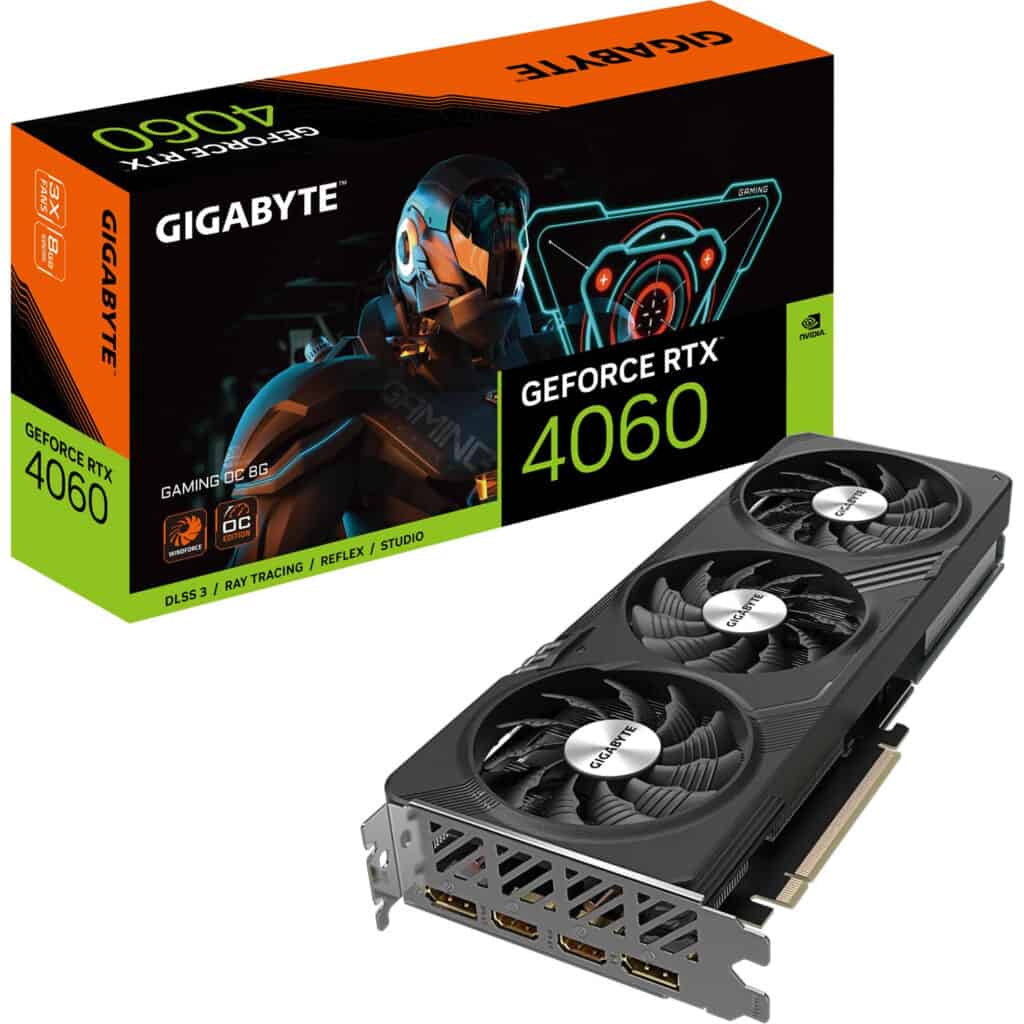
The NVIDIA GeForce RTX 4060 represents one of the Best Budget Graphics Cards available in 2025, offering excellent 1080p performance with modern features like DLSS 3 and ray tracing capabilities. Priced competitively in the budget segment, this card delivers consistent performance across a wide range of games while maintaining reasonable power consumption and thermal characteristics.
Performance benchmarks place the RTX 4060 among the Best Budget Graphics Cards for users who want future-proofing features without paying premium prices. The card handles most modern games at high settings with 60+ FPS at 1080p, while DLSS technology can boost performance in supported titles. Ray tracing performance, while not flagship-level, provides a taste of advanced lighting effects in compatible games.
RTX 4060 Specifications and Features
The technical specifications of the RTX 4060 solidify its position among Best Budget Graphics Cards for 2025. Built on NVIDIA’s efficient Ada Lovelace architecture, the card features 8GB of GDDR6 memory, providing adequate VRAM for current and near-future games at 1080p resolution. The 128-bit memory bus and modern architecture ensure efficient data handling and reduced bottlenecks during gaming sessions.
Power efficiency represents another strength of this entry in our Best Budget Graphics Cards list. With a total graphics power rating of 115W, the RTX 4060 fits comfortably in most budget system builds without requiring expensive power supply upgrades. This efficiency translates to lower electricity costs and reduced heat generation, making it an excellent choice for compact builds or systems with limited cooling capacity.
Best Budget Graphics Cards For 1080P Gaming In 2025 4
AMD Radeon RX 7600: The Value Champion
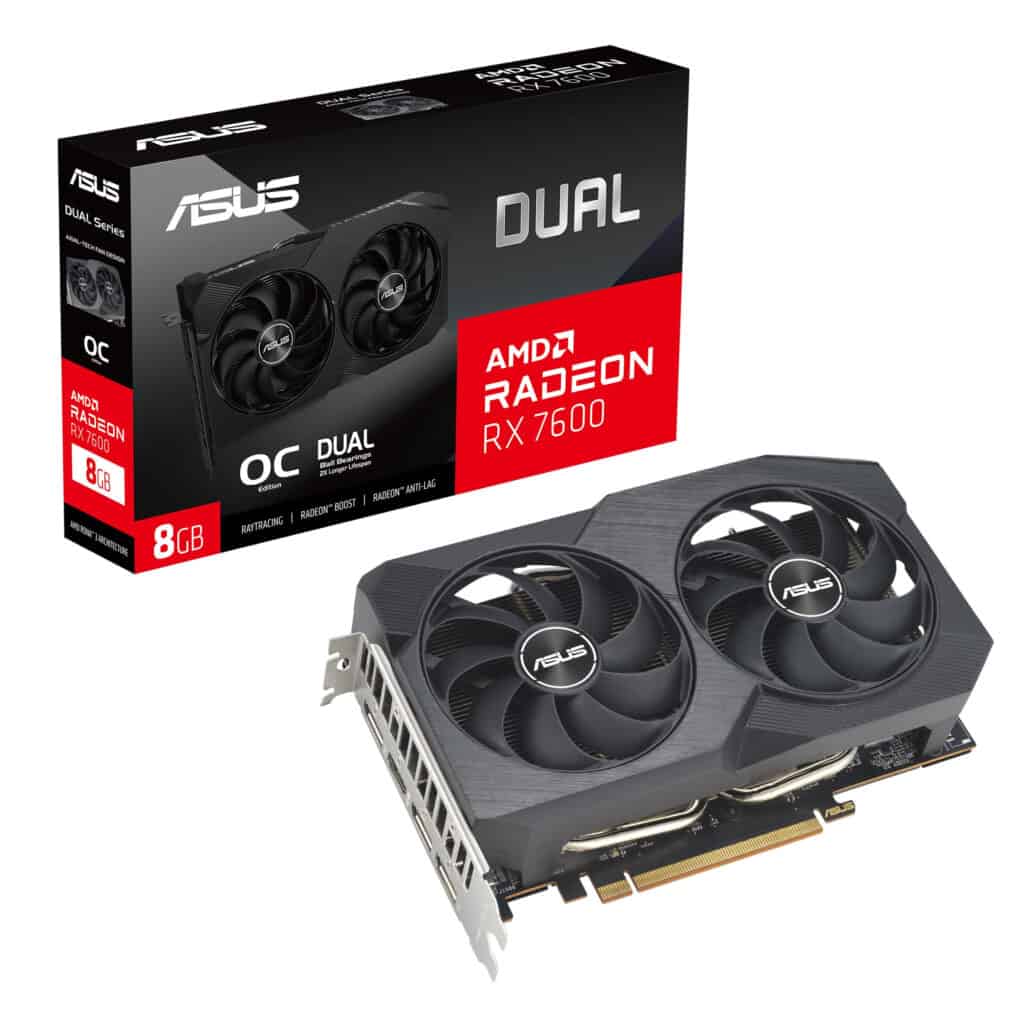
AMD’s Radeon RX 7600 stands out among Best Budget Graphics Cards by offering exceptional raw performance per dollar, making it an attractive option for gamers prioritizing frame rates over advanced features. This card excels in traditional rasterization performance while providing solid value for users focused primarily on gaming without ray tracing requirements.
The RX 7600 earns its place among Best Budget Graphics Cards through consistent performance delivery across various gaming scenarios. Benchmark results show strong 1080p performance in both competitive esports titles and demanding AAA games, often matching or exceeding more expensive alternatives in pure rasterization performance. The card’s strength lies in providing reliable, high-quality gaming experiences without unnecessary premium features that increase cost.
RX 7600 Performance and Value Analysis
In terms of specifications, the RX 7600 justifies its inclusion among Best Budget Graphics Cards with 8GB of GDDR6 memory and AMD’s RDNA 3 architecture. The card delivers excellent performance in games that don’t heavily utilize ray tracing, often outperforming competing options in traditional gaming benchmarks. This makes it particularly appealing for gamers who prioritize frame rates and visual quality over cutting-edge lighting effects.
The value proposition of the RX 7600 among Best Budget Graphics Cards becomes evident when considering price-to-performance ratios. AMD has positioned this card aggressively in the market, often providing better performance per dollar than competing options. For budget-conscious gamers seeking maximum gaming performance within financial constraints, the RX 7600 represents an compelling choice that maximizes every dollar spent.
Best Budget Graphics Cards For 1080P Gaming In 2025 5
Intel Arc A750: The Dark Horse Contender
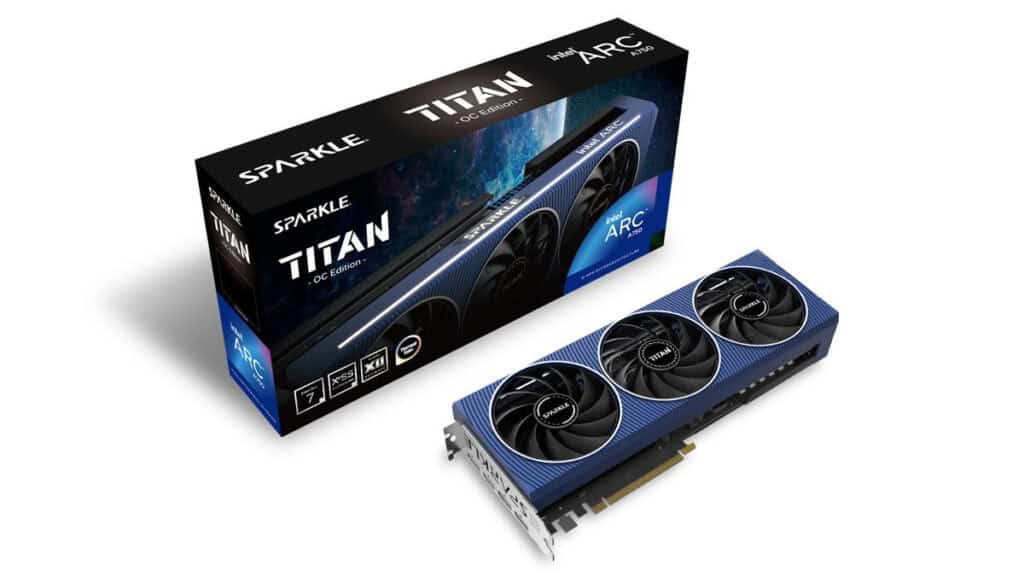
Intel’s Arc A750 has emerged as a surprising entry among Best Budget Graphics Cards, offering unique value propositions and competitive performance that shouldn’t be overlooked. While Intel’s graphics division is relatively new to the discrete GPU market, the Arc A750 provides solid 1080p gaming performance with some interesting advantages over traditional competitors.
The Arc A750 secures its position among Best Budget Graphics Cards through aggressive pricing and surprising performance capabilities. Intel has priced this card competitively to gain market share, resulting in excellent value for consumers willing to consider alternatives to AMD and NVIDIA options. The card performs particularly well in modern games with updated drivers, showing Intel’s commitment to improving the gaming experience through software optimization.
Arc A750 Unique Features and Considerations
What makes the Arc A750 noteworthy among Best Budget Graphics Cards is Intel’s focus on modern gaming APIs and technologies. The card performs exceptionally well in DirectX 12 and Vulkan games, often punching above its weight class in titles that utilize these modern rendering APIs. This forward-looking approach makes it an interesting choice for gamers who primarily play newer titles.
However, potential buyers should consider some factors when evaluating the Arc A750 among Best Budget Graphics Cards. Driver maturity remains a consideration, though Intel has made significant improvements since launch. Older games using DirectX 11 or earlier APIs may not perform as strongly as on competing cards, making this option better suited for gamers focused on modern titles rather than extensive back catalogs.
Best Budget Graphics Cards For 1080P Gaming In 2025 6
Detailed Performance Analysis and Comparisons
Understanding how Best Budget Graphics Cards perform across different gaming scenarios provides crucial insights for making informed purchasing decisions. Real-world performance varies significantly based on game optimization, settings preferences, and system configuration, making comprehensive analysis essential for proper evaluation.
Gaming Performance Across Popular Titles
The Best Budget Graphics Cards for 2025 deliver varying performance levels depending on the specific games and settings used. Competitive esports titles like Counter-Strike 2, Valorant, and League of Legends run exceptionally well on all recommended cards, often achieving frame rates well above 100 FPS at maximum settings. These games are well-optimized and less demanding, allowing Best Budget Graphics Cards to shine in competitive gaming scenarios.
AAA gaming performance represents the real test for Best Budget Graphics Cards, where the differences between options become more apparent. Games like Cyberpunk 2077, Assassin’s Creed Mirage, and Call of Duty typically require medium to high settings to maintain 60 FPS consistently. The Best Budget Graphics Cards handle these demanding titles admirably, though users may need to adjust specific settings to optimize performance for their preferences.
Esports and Competitive Gaming Performance
For esports enthusiasts, Best Budget Graphics Cards provide more than adequate performance for competitive gaming scenarios. High refresh rate monitors benefit significantly from the consistent high frame rates these cards deliver in competitive titles. Frame rate consistency matters more than peak performance in competitive gaming, and the Best Budget Graphics Cards excel in providing stable, predictable performance that enhances competitive play.
The Best Budget Graphics Cards also support modern display technologies that benefit competitive gaming, including variable refresh rate monitors and low-latency gaming modes. These features reduce input lag and screen tearing, providing smoother gaming experiences that can provide competitive advantages in fast-paced games. Understanding these capabilities helps competitive gamers maximize their performance potential with budget-friendly hardware.
Ray Tracing and DLSS Performance Considerations
Modern Best Budget Graphics Cards offer varying levels of ray tracing support, though performance in ray-traced games typically requires significant setting adjustments to maintain playable frame rates. Ray tracing represents a premium feature that comes with performance costs, and budget cards generally prioritize traditional rasterization performance over ray tracing capabilities.
DLSS and FSR technologies can significantly improve performance in supported games when using Best Budget Graphics Cards with these features. These upscaling technologies render games at lower internal resolutions before intelligently upscaling to your display resolution, often providing 20-30% performance improvements with minimal visual quality loss. Understanding which Best Budget Graphics Cards support these technologies helps maximize performance in demanding games.
Future-Proofing Considerations
When evaluating Best Budget Graphics Cards for long-term use, consider which features and capabilities will remain relevant as games evolve. Cards with more VRAM generally maintain better performance as games become more demanding, while support for modern APIs and features like mesh shaders provides better compatibility with future titles.
The Best Budget Graphics Cards that balance current performance with future compatibility offer the best long-term value. While no budget card will remain cutting-edge indefinitely, choosing options with modern architectures and adequate VRAM ensures satisfactory performance for several years. This approach maximizes the return on investment and delays the need for future upgrades.
Power Consumption and System Requirements
The Best Budget Graphics Cards generally maintain reasonable power consumption levels, making them suitable for most budget system builds without requiring expensive power supply upgrades. Understanding power requirements helps ensure system compatibility and prevents potential stability issues related to inadequate power delivery.
Most Best Budget Graphics Cards operate within 100-150W power envelopes, requiring 6-pin or 8-pin PCIe power connectors from the power supply. A quality 500W power supply typically provides adequate power for systems built around these cards, though specific requirements vary based on the complete system configuration and efficiency ratings of components used.
Thermal Performance and Cooling Requirements
Thermal management represents an important consideration when selecting among Best Budget Graphics Cards, as adequate cooling ensures consistent performance and component longevity. Most budget cards feature dual-fan cooling solutions that effectively manage heat generation during gaming sessions, though specific thermal performance varies between manufacturers and card designs.
The Best Budget Graphics Cards typically maintain reasonable noise levels during operation, balancing cooling performance with acoustic comfort. Custom cooling solutions from board partners often provide improved thermal performance and reduced noise compared to reference designs, making them worthy of consideration for users prioritizing quiet operation or improved cooling performance.
Buying Guide and Recommendations
Selecting the optimal choice among Best Budget Graphics Cards requires careful consideration of individual needs, system compatibility, and budget constraints. Understanding the key factors that influence graphics card performance and value helps ensure satisfaction with your purchase decision and optimal gaming experiences.
Factors to Consider When Choosing Budget Graphics Cards
When evaluating Best Budget Graphics Cards, VRAM capacity represents a crucial specification that affects both current and future gaming performance. Games increasingly utilize higher resolution textures and more complex visual effects, making adequate VRAM essential for maintaining smooth performance. The Best Budget Graphics Cards typically include 8GB of VRAM, providing sufficient memory for current 1080p gaming needs while offering reasonable future-proofing.
Memory bandwidth and architecture efficiency also influence the performance characteristics of Best Budget Graphics Cards. Modern GPU architectures incorporate various optimizations that improve performance per watt and reduce memory bandwidth requirements through compression techniques and efficient data handling. Understanding these technical aspects helps identify Best Budget Graphics Cards that deliver superior performance within their price segments.
Compatibility and System Integration
System compatibility represents another essential factor when selecting Best Budget Graphics Cards for your gaming setup. Physical card dimensions must fit within your case, while power supply capacity and connector availability determine electrical compatibility. Most Best Budget Graphics Cards utilize standard dual-slot designs and require basic PCIe power connections, making them compatible with most modern systems.
Driver support and software features vary between manufacturers and can significantly impact the user experience with Best Budget Graphics Cards. Regular driver updates improve game compatibility and performance, while manufacturer-specific software provides overclocking tools, performance monitoring, and optimization features. Researching driver quality and support commitments helps ensure long-term satisfaction with your chosen graphics card.
Price-to-Performance Analysis
The most compelling Best Budget Graphics Cards provide exceptional value by delivering strong gaming performance at accessible price points. Calculating performance per dollar helps identify the most efficient options and ensures maximum value from your graphics card investment. Market pricing fluctuates regularly, making it important to research current prices when making purchasing decisions.
Regional pricing variations can significantly affect which options represent the Best Budget Graphics Cards in different markets. Availability, import duties, and regional competition influence local pricing, potentially making different cards more attractive depending on your location. Monitoring prices across multiple retailers and considering seasonal sales events can result in significant savings on graphics card purchases.
When to Buy and Market Timing
Graphics card markets experience regular price fluctuations based on new product launches, cryptocurrency demand, and seasonal sales events. Understanding market cycles helps identify optimal purchasing windows for Best Budget Graphics Cards and can result in substantial savings. New GPU generations typically cause price reductions in previous-generation cards, creating opportunities for budget-conscious buyers.
The Best Budget Graphics Cards often represent excellent value immediately following the launch of higher-end products, as manufacturers focus on clearing inventory and establishing competitive positions in the budget segment. Patience and market awareness can result in acquiring premium features and performance at budget prices during these market transitions.
Upgrade Path and Future Considerations
Planning upgrade paths when purchasing Best Budget Graphics Cards helps maximize long-term value and system evolution. Understanding when graphics card upgrades become necessary and which components might create bottlenecks in future configurations ensures optimal resource allocation and upgrade timing.
The Best Budget Graphics Cards provide excellent stepping stones for users planning to upgrade to higher-performance options in the future. These cards maintain good resale value and can serve secondary purposes like dedicated streaming cards or in secondary gaming systems. This flexibility adds value beyond primary gaming performance and extends the useful life of your graphics card investment.
Making the Right Choice Among Best Budget Graphics Cards
The current market for Best Budget Graphics Cards offers exceptional options for 1080p gaming enthusiasts seeking maximum value without compromising gaming experiences. Each recommended card provides unique advantages and considerations, making the optimal choice dependent on individual priorities, system requirements, and budget constraints.
Final Recommendations for Different User Types
For gamers prioritizing future-proofing features and modern technologies, the NVIDIA RTX 4060 represents an excellent choice among Best Budget Graphics Cards. Its DLSS support, ray tracing capabilities, and efficient architecture provide longevity and feature compatibility with upcoming games. Users focused on maximum performance per dollar should strongly consider the AMD RX 7600, which delivers exceptional rasterization performance and represents outstanding value in the Best Budget Graphics Cards category.
The Intel Arc A750 offers a compelling alternative among Best Budget Graphics Cards for users willing to embrace newer technologies and primarily play modern games. Its competitive pricing and strong performance in contemporary titles make it an intriguing option for forward-thinking budget builders. Each of these Best Budget Graphics Cards provides excellent 1080p gaming experiences while maintaining affordability and reasonable system requirements.
The Future of Budget Gaming Graphics
The landscape of Best Budget Graphics Cards continues evolving rapidly, with manufacturers consistently improving performance and features while maintaining competitive pricing. Future developments in GPU architecture, manufacturing processes, and software technologies promise even better value propositions for budget-conscious gamers. Staying informed about market developments helps identify emerging opportunities in the Best Budget Graphics Cards segment.
As gaming technologies advance and become more accessible, the Best Budget Graphics Cards will continue providing entry points into premium gaming experiences. The democratization of advanced graphics features ensures that budget gaming remains viable and enjoyable, making high-quality gaming experiences available to broader audiences. This trend reinforces the importance of the Best Budget Graphics Cards category in the overall gaming ecosystem.
By carefully considering your specific needs, system requirements, and budget constraints, you can confidently select from the Best Budget Graphics Cards available in 2025 and enjoy exceptional 1080p gaming experiences without breaking the bank. The current market offers outstanding options that prove you don’t need to spend premium prices to achieve satisfying gaming performance and visual quality.
The Illusion of Stability in Modern Updates For most users, operating system updates are something that simply happen. They arrive quietly, often installing in the background, requiring little more than…
Macbook Neo, How Does It Compare To Air & Pro? Over the last few years the laptop market has experienced one of the most significant architectural changes in its history.…
Apple’s latest product announcements mark one of the most significant shifts in the Mac lineup in more than a decade. While Apple routinely updates its hardware with faster chips, incremental…
There is a particular kind of frustration that only a slow computer can produce. It is not dramatic. It is not urgent. It does not scream for attention. Instead, it…
In an era where nearly every aspect of personal computer maintenance and professional life is mediated through digital systems, your computer is no longer a luxury device — it is…
Phone says charging but battery not increasing is one of the most frustrating problems smartphone users face. You plug it in.The lightning bolt appears.It says “Charging.” But the battery percentage…
Apple’s rumour cycle always looks like a thousand disconnected leaks — until you line them up and notice the same themes repeating: AI-first silicon, camera and display differentiation, form-factor experiments (foldables / spatial…
Wi-Fi connected but no internet is one of the most frustrating messages you can see on a computer or laptop. The Wi-Fi icon shows full bars.It says “Connected.”But websites won’t…
Unfortunately, there was an error submitting your request.
Please try again later, or reach out to us directly. You can call us at +44 1429 280955 or email us at sales@kingfishercomputers.co.uk for assistance. We’re here to help you get your computer back up and running!
We’ve received your booking, Our team will get in touch with you shortly to confirm the details. You’re one step closer to having your computer fixed! If you have any urgent questions, feel free to contact us. Otherwise, sit back, and we’ll handle the rest.