Samsung Galaxy S26 vs Pixel 10 Pro / Pixel 10 Pro Fold vs iPhone 17 Pro: The 2026 Flagship Landscape
Connor Boyle
January 23rd, 2026
Table of Contents
The flagship phone market in early 2026 is shaping up to be a three-way contest with very different philosophies:
Samsung is setting up the Galaxy S26 line as its “everything phone” progression—hardware refinement, ecosystem depth, and broad carrier availability—while also leaning harder into next-gen charging (notably Qi2) and accessory ecosystems. (The Verge)
Google already has the Pixel 10 Pro and Pixel 10 Pro Fold in market, with the story centered on Tensor G5, Gemini-driven AI, and a “software-first camera” approach—plus a foldable that’s moving the durability conversation forward. (Google Store)
Apple has pushed the iPhone 17 Pro further into pro-grade imaging with all-48MP rear cameras and a notably longer 8x optical-quality zoom system, tightening its grip on premium video and creator workflows. (Apple)
This article breaks down what we know, what’s still rumoured, and what actually matters when you’re spending flagship money.
Release timing and what “release” really means now
Samsung Galaxy S26 Vs Pixel 10 Pro / Pixel 10 Pro Fold Vs Iphone 17 Pro: The 2026 Flagship Landscape 5
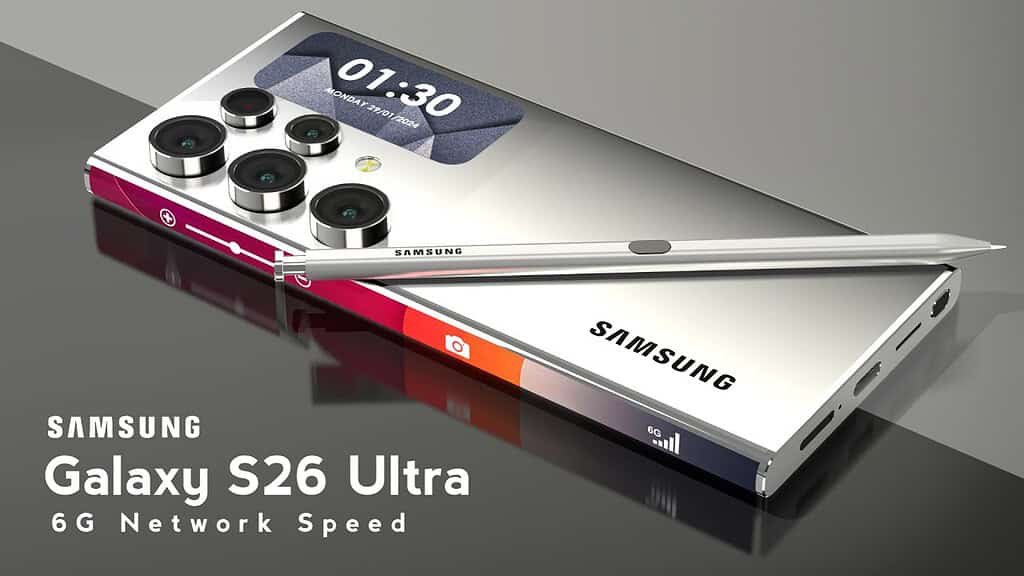
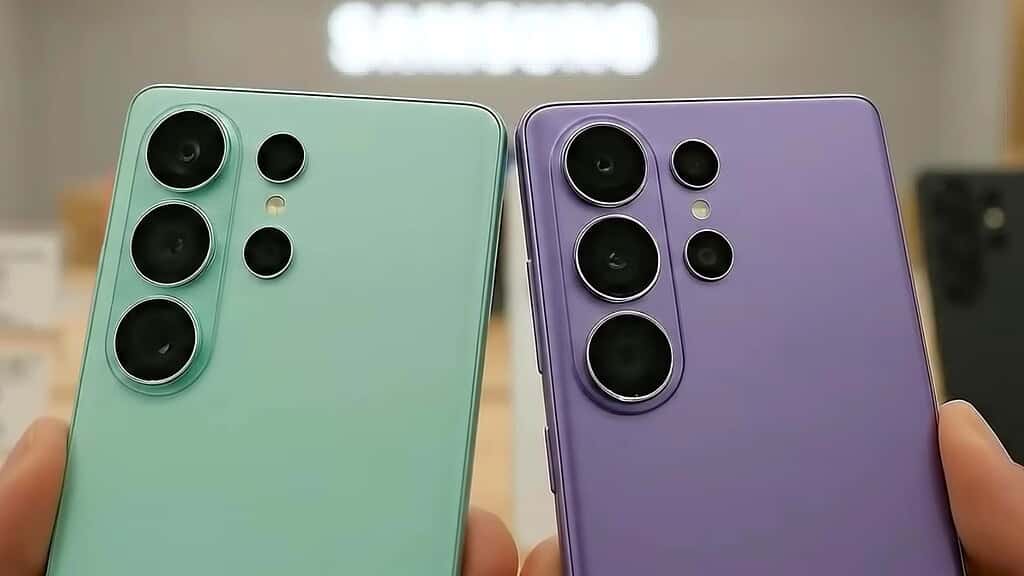
Samsung Galaxy S26
As of now, the Galaxy S26 is still in the pre-launch window. Multiple reports point to a late February 2026 Unpackedwith sales in early-to-mid March (dates are still not official). (The Independent) What’s meaningful here is not the exact day, but the cadence: Samsung is again targeting the “first major Android flagship window” of the year.
Google Pixel 10 Pro and Pixel 10 Pro Fold
Pixel 10 devices are already established for this cycle. Reporting and retailer information indicates the Pixel 10 lineup was announced in August 2025, with Pixel 10 Pro availability shortly after, while the Pixel 10 Pro Fold shipped later in October 2025. (Android Central) That matters because Pixel 10 is now the “known quantity” you can buy, review, and benchmark against any S26 claims.
Apple iPhone 17 Pro
Apple’s iPhone 17 Pro is official, with Apple’s own UK pages detailing the camera system and optical zoom range. (Apple)
The big macro shift: Qi2 and the “magnetic ecosystem” race
Samsung Galaxy S26 Vs Pixel 10 Pro / Pixel 10 Pro Fold Vs Iphone 17 Pro: The 2026 Flagship Landscape 6
For years, Apple’s MagSafe has been the most coherent magnetic accessory ecosystem in phones. Android has flirted with it (cases, rings, third-party solutions), but the next step is a cleaner, standardised approach.
Galaxy S26 and Qi2 (rumoured, but increasingly concrete)
One of the more tangible S26 signals is not a leaked render—it’s an accessory: reporting suggests a Samsung wireless battery pack that supports Qi2, including a magnetic charging ring and 15W Qi2 charging. This strongly implies Samsung is preparing for a more first-party magnetic story around S26. (The Verge)
Some reporting also suggests the S26 family may include the magnets required for Qi2 certification (still rumour until Samsung confirms device internals). (The Verge)
Pixel 10 and Qi2 as a lived reality
Pixel 10’s positioning around magnetic charging is already being discussed in launch coverage and guides, with the broader narrative that Pixel is now “properly in” the magnetic accessory era. (Android Central)
iPhone 17 Pro and MagSafe maturity
Apple doesn’t need to “introduce” magnets; it needs to keep making the ecosystem more compelling. The iPhone 17 Pro story is less about whether it supports magnetic accessories and more about how well it integrates with creator gear and daily workflows.
Why this matters in real buying terms: If you live on car mounts, desk stands, battery packs, and travel chargers, the phone that makes those interactions frictionless tends to win long-term satisfaction—even if raw performance is “close enough.”
Performance: Snapdragon-style brute force vs Tensor-style AI optimisation vs Apple silicon consistency
Samsung Galaxy S26 Vs Pixel 10 Pro / Pixel 10 Pro Fold Vs Iphone 17 Pro: The 2026 Flagship Landscape 7
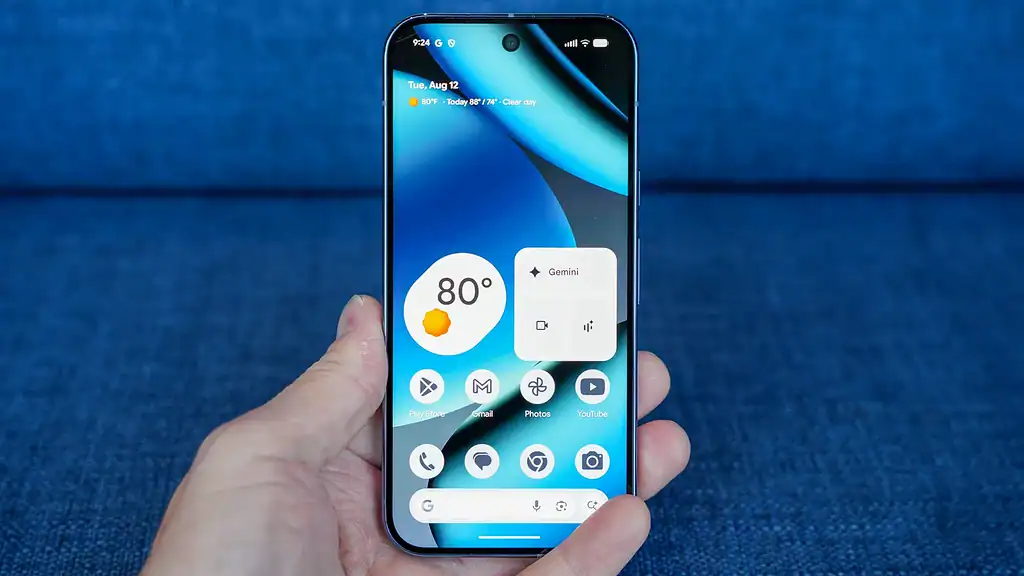
Pixel 10 Pro / Fold: Tensor G5 and the AI-first thesis
Google positions Tensor G5 as a major step, including claims around TPU and CPU uplifts for AI workloads, plus imaging pipeline gains. (Google Store) The practical Pixel pitch remains consistent: you’re buying the phone that feels like it was designed around Google’s AI stack end-to-end—Gemini, contextual features, and computational photography.
iPhone 17 Pro: the “predictably fast” advantage
Apple’s strength in the Pro tier tends to be less about headline cores and more about sustained performance, ecosystem optimisation, and pro app support. What Apple is loudly emphasising for iPhone 17 Pro is imaging capability—because the performance baseline is assumed at this point for most buyers. (Apple)
Galaxy S26: what we can responsibly say
Because S26 hasn’t launched, anything about the SoC, sustained performance, thermals, or battery endurance is speculative unless Samsung confirms it. The safer lens is this: Samsung’s S-series is typically a performance leader in Android at launch, and the “Ultra” variant usually targets the top end of compute plus camera hardware—then tries to differentiate with software features and ecosystem breadth.
Cameras: three different definitions of “best”
Samsung Galaxy S26 Vs Pixel 10 Pro / Pixel 10 Pro Fold Vs Iphone 17 Pro: The 2026 Flagship Landscape 8
Cameras are now less about single “best” and more about what you personally shoot: kids/pets, social video, landscape, low light, product photography, or creator-grade content.
iPhone 17 Pro: “all 48MP rear cameras” plus longer reach
Apple is clearly pushing the iPhone 17 Pro as a pro camera tool:
48MP Pro Fusion camera system
All 48MP rear cameras
Up to 8x optical-quality zoom (and Apple describes a long total optical zoom range) (Apple)
If you care about:
consistent video colour science,
predictable capture,
and a long telephoto that still looks “real,” the iPhone 17 Pro is positioned as the safe pro default.
Pixel 10 Pro: Google’s “software camera” continues, with big zoom claims
Pixel 10 Pro marketing emphasizes:
a flagship camera experience,
high zoom capability (Google promotes very high zoom levels), (Google Store) and Tensor G5’s role in imaging. (Google Store)
What Pixel typically does better (in practical terms) is:
fast, consistent HDR handling,
reliable skin tones in mixed lighting,
and computational “salvage” when conditions aren’t ideal.
Pixel 10 Pro Fold: good cameras, but foldables still compromise
Independent review coverage notes the Pixel 10 Pro Fold’s camera setup is strong but still not on par with slab Pro models, reflecting the reality that foldables trade space for mechanics and durability. (The Guardian)
Galaxy S26 Ultra: the rumour zone (handle with care)
S26 Ultra camera upgrades are being discussed in the usual leak cycle, but until Samsung unveils final hardware and software, any direct comparison to iPhone 17 Pro or Pixel 10 Pro is necessarily provisional. The most credible approach is to treat S26 camera discussion as “likely directionally improved,” not “definitively better,” until we have real samples.
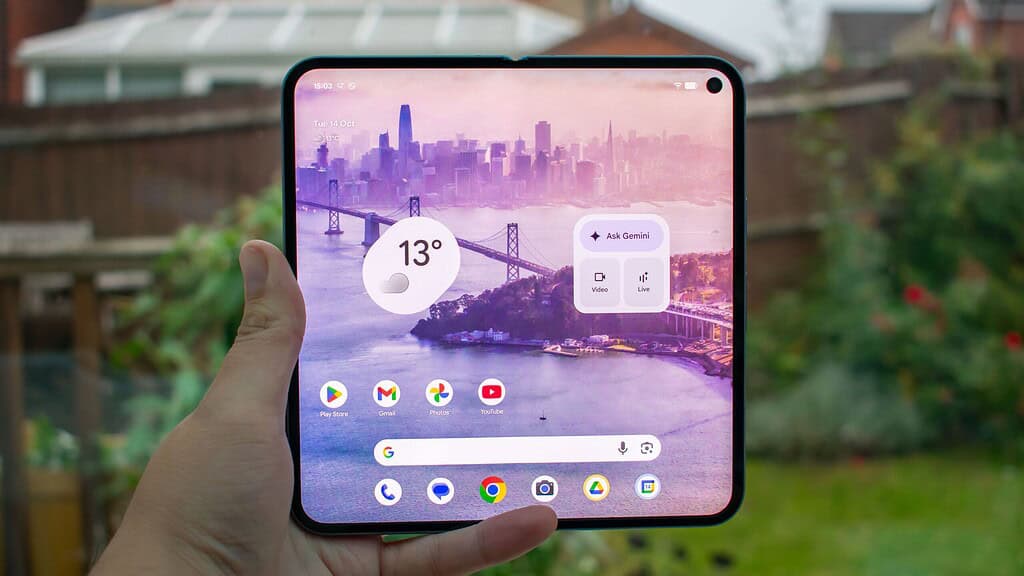
Foldables: Pixel 10 Pro Fold vs the rest of the market
If you’re considering a foldable, you’re not comparing it to slab phones on the same terms. You’re buying a different computing shape.
What Pixel 10 Pro Fold is doing right
A key callout in review coverage is durability and resistance—including emphasis that this generation is meaningfully more resilient (with discussion of dust and water resistance improvements). (The Guardian) That’s important because foldables historically have been “amazing until they aren’t,” with durability anxiety as the biggest adoption blocker.
The trade-offs you accept with foldables
Heavier devices and thicker pockets
More fragile inner displays than slab phones
Sometimes weaker camera hardware than the best slabs Those compromises still exist, even as each generation improves. (The Guardian)
The upside is real
One device that can behave like a phone and a mini tablet
Better multitasking layouts
Better reading, spreadsheets, documents, and travel productivity
If your day involves email triage, quoting, on-the-go docs, or remote admin dashboards, foldables are increasingly rational—not just novelty.
Software support and “phone lifespan” economics
Pixel 10 Pro: strong long-term update commitments
Google positions Pixel 10 Pro as a device built to get “years” of new features and updates, and Pixel in general has moved into the top tier for long support windows. (Google Store)
iPhone 17 Pro: the stability play
Apple’s iPhone lifecycle is historically the “safe depreciation curve” in premium phones: long iOS support, strong resale value, consistent app optimisation.
Galaxy S26: Samsung’s mainstream advantage
Samsung has been aggressive on Android support commitments in recent generations, and the practical advantage is Samsung’s wide ecosystem footprint: tablets, buds, watches, PCs, SmartThings—plus huge carrier availability.
Pricing and value: what you should actually optimise for
Instead of debating which phone is “best,” optimise for the failure mode you most want to avoid:
Choose iPhone 17 Pro if you want to avoid:
inconsistent video quality across apps,
“Android quirks” in third-party social camera pipelines,
and you want the cleanest creator workflow plus strong telephoto reach. (Apple)
Choose Pixel 10 Pro if you want to avoid:
bloated UI layers,
slow feature delivery,
and you want Google’s AI features first, with a camera that does heavy lifting automatically. (Google Store)
Choose Pixel 10 Pro Fold if you want to avoid:
carrying a second device (tablet/laptop) for light productivity,
cramped reading/editing experiences,
and you accept paying for the form factor and durability improvements. (The Guardian)
Consider Galaxy S26 if you want to avoid:
being locked into one ecosystem,
limited carrier options,
and you want the most “mainstream premium Android” path—especially if Samsung delivers a truly integrated Qi2 magnetic accessory ecosystem. (The Verge)
Head-to-head comparisons that matter (without spec-sheet theatre)
1) Charging and accessories
Pixel 10: strong narrative around magnetic accessories and modern charging. (Android Central)
Galaxy S26: rumours look increasingly credible that Samsung is going big on Qi2, and the accessory leak supports that direction. (The Verge)
iPhone 17 Pro: MagSafe maturity; accessory experience is already a known strength.
Verdict: If magnets + mounts + battery packs are central to your day, this is a bigger decision factor than 5% more benchmark score.
2) Camera reach (telephoto)
iPhone 17 Pro: Apple is explicitly leaning into longer optical-quality zoom. (Apple)
Galaxy S26 Ultra: likely competitive, but you should reserve judgment until real samples and final camera stack are public.
Verdict: If you shoot distant subjects (sports days, wildlife, events), iPhone 17 Pro’s optical-quality zoom push is a meaningful headline. (Apple)
3) AI features that actually stick
Pixel 10: the highest probability that AI features feel integrated and “native,” because Google owns the stack. (Google Store)
Samsung: typically broad feature set, sometimes uneven in what becomes indispensable.
Apple: tends to be conservative but very polished when features ship.
Verdict: If you want AI as a daily tool rather than a demo, Pixel remains the clearest bet.
4) Foldable productivity
Pixel 10 Pro Fold is the only one in this comparison that fundamentally changes what your phone can be—at a cost and weight premium. (The Guardian)
Verdict: If you will actually use the unfolded screen every day, the foldable is a category shift, not a spec upgrade.
A realistic buying guide
If you upgrade every year
Wait for Galaxy S26 official launch details (and reviews) before deciding; otherwise you’re comparing confirmed devices to pre-release claims. In the meantime, the iPhone 17 Pro and Pixel 10 series are “safe buys” with known strengths. (Android Central)
If you keep phones 3–5 years
Prioritise:
battery health and charging ecosystem,
software support cadence,
resale value (if relevant),
camera reliability (not just peak capability).
Pixel 10 Pro and iPhone 17 Pro look especially strong for long ownership due to the coherence of their respective ecosystems and update posture. (Google Store)
If you care about business use (admin, ops, content)
Pixel 10 Pro Fold: best “one device” option if you’ll actually multitask on the larger display. (The Guardian)
iPhone 17 Pro: best “capture and publish” option if content is revenue-critical. (Apple)
Galaxy S26: likely best “broad compatibility” Android flagship—especially if Qi2 ends up being properly integrated at the device level. (The Verge)
The bottom line
Expanded buying guide summary
iPhone 17 Pro: the most “predictable pro” choice
If you want the cleanest, most consistent “pro phone” experience, the iPhone 17 Pro is the safest premium pick because Apple optimises hardware, software, and third-party app behaviour as a single system. In practice, that predictability shows up in three places:
Camera reliability (especially video): iPhone Pros are typically the benchmark for “press record, get usable footage” across lighting conditions and apps. With iPhone 17 Pro, Apple is leaning harder into a pro-grade imaging message—highlighting 48MP across the rear cameras and a longer optical-quality zoom reach that’s designed to keep detail and realism at distance.
Creator workflow and consistency: If your phone is routinely used for product shots, quick reels, customer site walkarounds, or documentation, the iPhone’s strength is that it behaves consistently across native camera, social apps, and editing tools—less time fighting settings, more time producing.
Ecosystem and resale economics: Apple’s accessory ecosystem (MagSafe, cases, mounts, microphones, gimbals) is mature, and resale value tends to remain strong, which can materially change the “true cost” over a 2–4 year upgrade cycle.
Pick iPhone 17 Pro if the main thing you want to avoid is variance—variance in capture quality, in app behaviour, and in long-term value.
Pixel 10 Pro: the “Google-native” flagship for people who want AI that’s actually usable
Pixel’s advantage isn’t that it wins every spec-sheet comparison; it’s that Google can weave AI and camera computation into the operating system in a way other Android OEMs struggle to replicate. Pixel 10 Pro is the cleanest version of that thesis right now:
AI that feels like an OS feature, not an add-on: Pixel is positioned around Gemini-style workflows and system-level intelligence—features that are designed to reduce friction in daily use (drafting, summarising, assisting, photo and voice intelligence, and generally “getting to the outcome faster”).
Computational photography DNA: Pixels tend to deliver excellent results when conditions are imperfect—mixed lighting, motion, backlit scenes, quick snapshots—because the software is doing a lot of heavy lifting. Pixel 10 Pro continues to push that identity alongside strong zoom claims and Tensor G5’s imaging pipeline story.
A clean, fast-feeling Android experience: For buyers who dislike heavy manufacturer skins, Pixel typically feels more direct: fewer duplicate apps, fewer layers between you and the OS, and faster delivery of Google-first features.
Pick Pixel 10 Pro if you want your phone to feel like the reference implementation of modern Android—and you value AI and camera computation as everyday tools rather than occasional gimmicks.
Pixel 10 Pro Fold: the “one device instead of two” productivity play
Foldables only make sense if you’ll routinely use the larger screen; otherwise they can feel like an expensive compromise. Pixel 10 Pro Fold is compelling because it offers a genuine category shift:
Real productivity gains: If you regularly review long emails, edit docs, run dashboards, manage spreadsheets, or do admin tasks between site visits, the unfolded display can replace a meaningful portion of tablet usage. It also improves reading, mapping, quoting, and multitasking in ways slab phones cannot.
The durability story is central: Historically, foldables have been held back by durability anxiety (hinges, inner displays, dust exposure). Coverage around Pixel 10 Pro Fold has put emphasis on improved resilience and protection, which is a core part of why this generation is easier to recommend.
You still accept trade-offs: Foldables can be heavier and thicker, and they often lag the best slab phones in camera hardware. The question is whether the utility you gain from the form factor outweighs the compromises.
Pick Pixel 10 Pro Fold if you want a phone that meaningfully changes how you work on the go—and you’ll actually unfold it daily.
Galaxy S26: the next “default Android flagship” to watch—especially if Qi2 goes fully mainstream for Samsung
Samsung’s S-series is usually the most broadly appealing Android flagship because it balances polish, performance, cameras, and mainstream availability (carriers, accessories, repairs, trade-in programmes). The Galaxy S26 is particularly interesting this cycle for two reasons:
Potential Qi2 / magnetic ecosystem step-change: Reporting around Samsung accessories and Qi2 support suggests Samsung may be preparing for a more cohesive magnetic charging/accessory story. If that translates into the phones themselves (not just cases), it can be a meaningful day-to-day upgrade—better mounts, cleaner charging, and more consistent accessory compatibility.
Mainstream polish and ecosystem breadth: Samsung’s strength is that it’s rarely the best at only one thing—it’s consistently “very good at everything,” with a deep ecosystem (buds, watches, tablets, Windows integration, SmartThings) and excellent availability/support through UK retail and carriers.
The reason it remains a watchlist recommendation is simple: until Samsung announces final specs, pricing, and what Qi2/magnets look like in the real product, the S26 is still a projection.
Pick Galaxy S26 if you want the most mainstream premium Android experience and you’re open to waiting for official confirmation—especially if magnetic Qi2 becomes a core Samsung story, not just an accessory footnote.
The Illusion of Stability in Modern Updates For most users, operating system updates are something that simply happen. They arrive quietly, often installing in the background, requiring little more than…
Macbook Neo, How Does It Compare To Air & Pro? Over the last few years the laptop market has experienced one of the most significant architectural changes in its history.…
Apple’s latest product announcements mark one of the most significant shifts in the Mac lineup in more than a decade. While Apple routinely updates its hardware with faster chips, incremental…
There is a particular kind of frustration that only a slow computer can produce. It is not dramatic. It is not urgent. It does not scream for attention. Instead, it…
In an era where nearly every aspect of personal computer maintenance and professional life is mediated through digital systems, your computer is no longer a luxury device — it is…
Phone says charging but battery not increasing is one of the most frustrating problems smartphone users face. You plug it in.The lightning bolt appears.It says “Charging.” But the battery percentage…
Apple’s rumour cycle always looks like a thousand disconnected leaks — until you line them up and notice the same themes repeating: AI-first silicon, camera and display differentiation, form-factor experiments (foldables / spatial…
Wi-Fi connected but no internet is one of the most frustrating messages you can see on a computer or laptop. The Wi-Fi icon shows full bars.It says “Connected.”But websites won’t…
Unfortunately, there was an error submitting your request.
Please try again later, or reach out to us directly. You can call us at +44 1429 280955 or email us at [email protected] for assistance. We’re here to help you get your computer back up and running!
We’ve received your booking, Our team will get in touch with you shortly to confirm the details. You’re one step closer to having your computer fixed! If you have any urgent questions, feel free to contact us. Otherwise, sit back, and we’ll handle the rest.